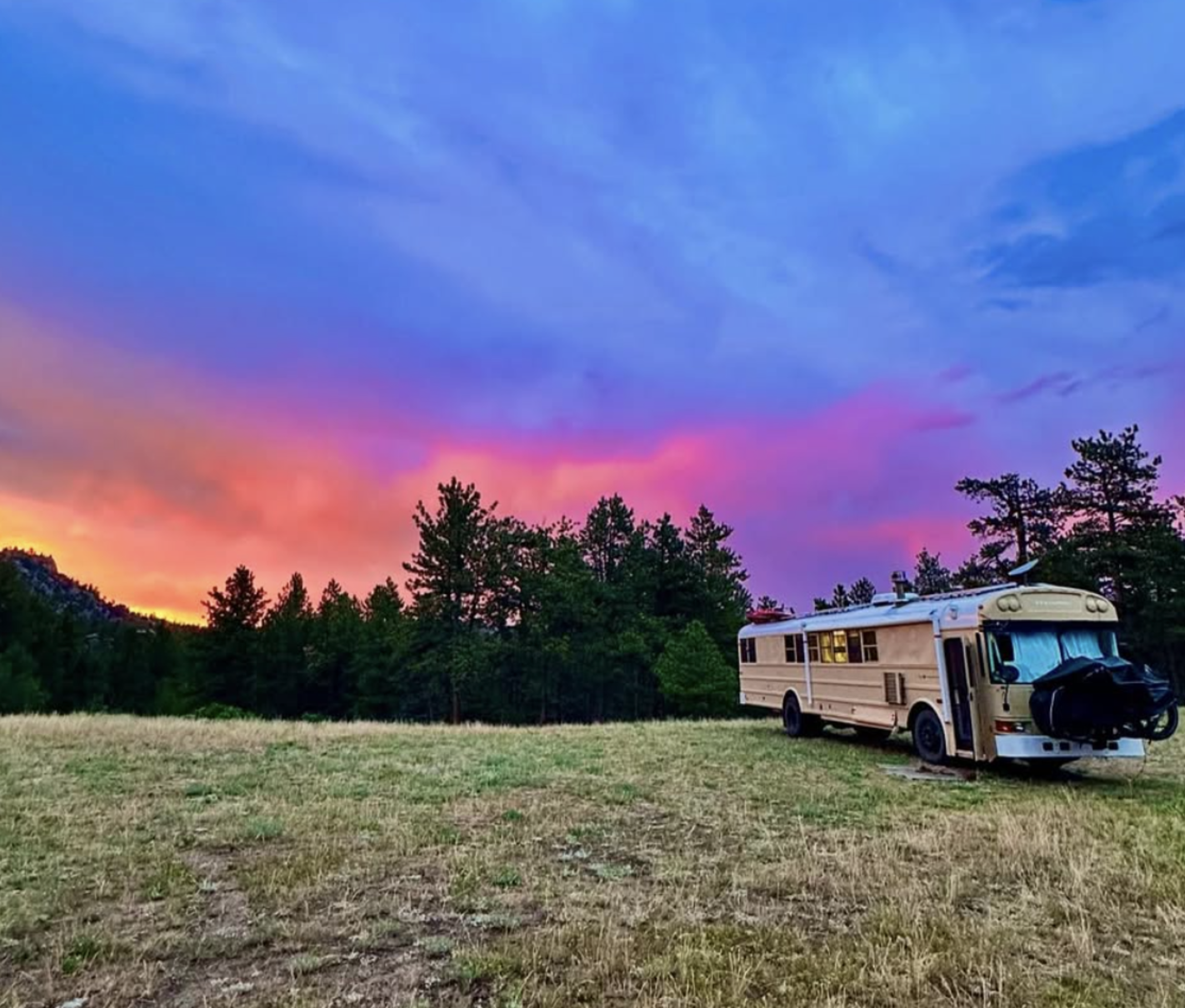

Allison and Nicholas Bracken (@rollingwithophelia) knew they wanted to live “smaller” but had difficulty deciding where to settle down. Neither of them had seen a lot of the United States and felt that it didn’t make sense to buy property without seeing what the rest of the country had to offer. Ultimately, they decided to buy a 40-foot school bus so that they could travel while having a comfortable and spacious home-on-wheels. This decision came about because they learned that buying a bus was significantly cheaper than buying a van.
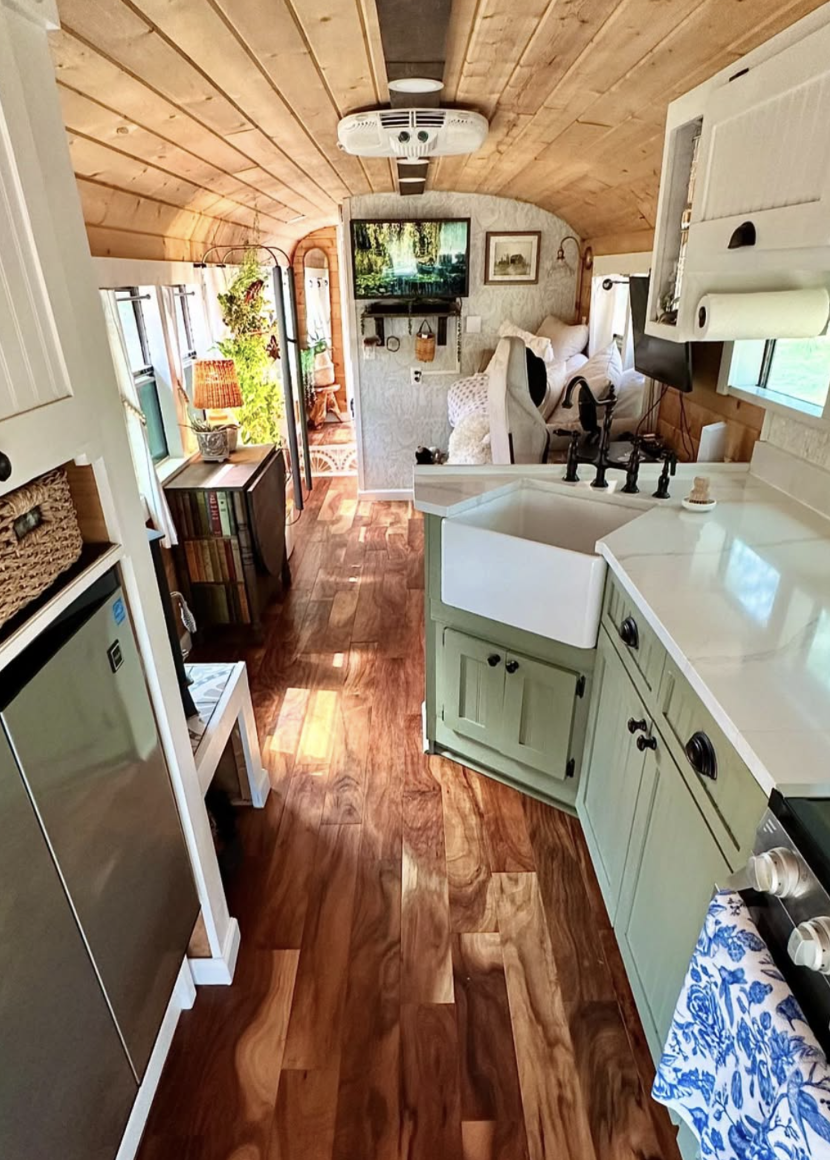
The Interior of the Bracken’s Bus
When reached out to for an interview, they said:
Not every day is beautiful! Sometimes it’s a complete shit show haha! Our fresh water tank has flooded the bus, our water lines have frozen solid in a snow storm while being parked in the middle of nowhere, our brakes have started smoking while going down a mountain. Things will break, your whole route may change and you might find yourself questioning your decisions to live in a bus at times, but there are incredible days that make up for those headaches, and are absolutely worth it. We’ve created so many memories along the way and we wouldn’t trade it for the world! At the end of the day, it’s not about what happened that day but about HOW you handled that situation. The right attitude will get you far in this lifestyle. (Bracken)
Even though the plan had been to only live in a bus for one year, three years later, they are still on the road enjoying life!
The History of Nomadism
Nomadism has always been a thing, but as of late, there has been an increase in interest. This is the result of the COVID-19 pandemic that locked people inside their homes and made them lose their jobs and loved ones. It made people reevaluate their lifestyle.
Felix Marquardt wrote a book titled "The New Nomads: How the Migration Movement is Marking the World a Better Place”. In his book, he says, ‘“Ninety-eight per cent of our time on Earth as anatomically modern humans has been spent as nomads. Living your whole life in the village, town or city of your birth is a relatively recent, anomalous development”’ (George). Humans used to be hunters and gatherers, who traveled to places that suited their needs. The increase in a stationary lifestyle came about during the Neolithic Revolution when agriculture and the domestication of animals emerged. In today’s society, nomadism is expressed through traveling in a tiny home.
What is Tiny Living
Tiny Living is a way of life that is gaining popularity. With an emphasis on minimalism, tiny houses are usually no larger than 400 square feet. There are multiple types of tiny living: living in a bus, living in a van, living in a permanent house, and living in a house that is on wheels. For details on the types of tiny living, look at the section labeled “Types”.
Why People are Choosing this Lifestyle
People are attracted to the tiny house lifestyle because “A tiny home can provide financial freedom, the freedom to live a nomadic life, a simpler life with less space to take care of, [and] less environmental impact” (Russel).
Tiny houses range in cost. For a cost breakdown, look at the section labeled “Price”. Overall, owning one is cheaper than owning a standard house.
Tiny houses allow people to live a more nomadic lifestyle where travel is more convenient. For a breakdown of travel, look at the section labeled “Travel”.
Owning a space under 400 square feet forces you to prioritize what items are most important to you. With a focus on minimalism, people consume less. This is better for the environment and people’s wallets.
Many people who choose to live a tiny lifestyle are generally more eco-conscious. Many tiny houses have composting toilets and are run on solar, in addition to other eco-friendly living choices.
Types
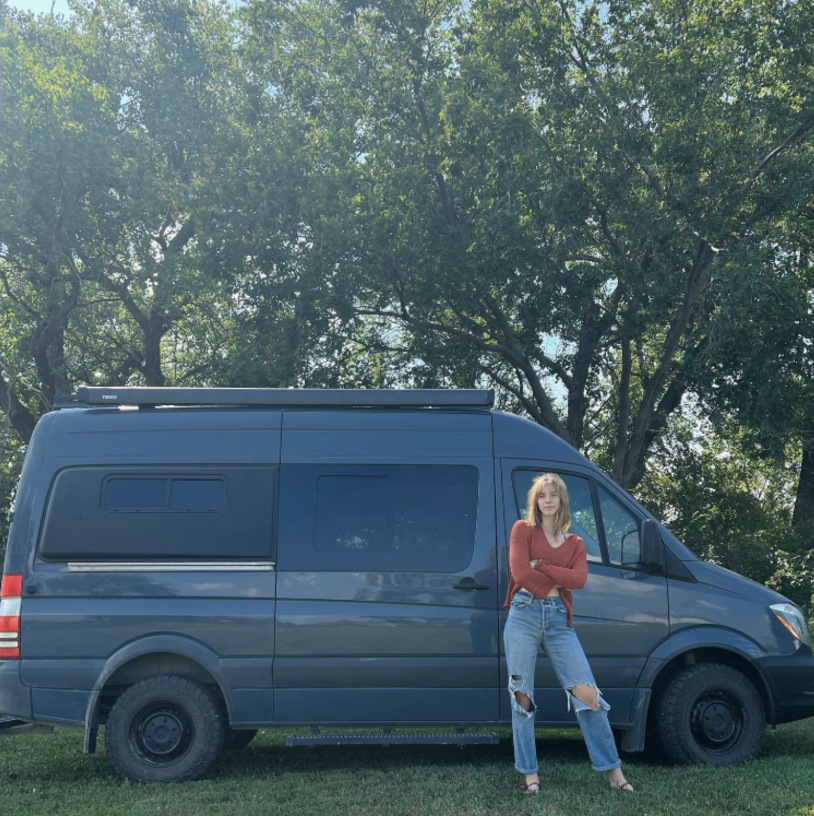
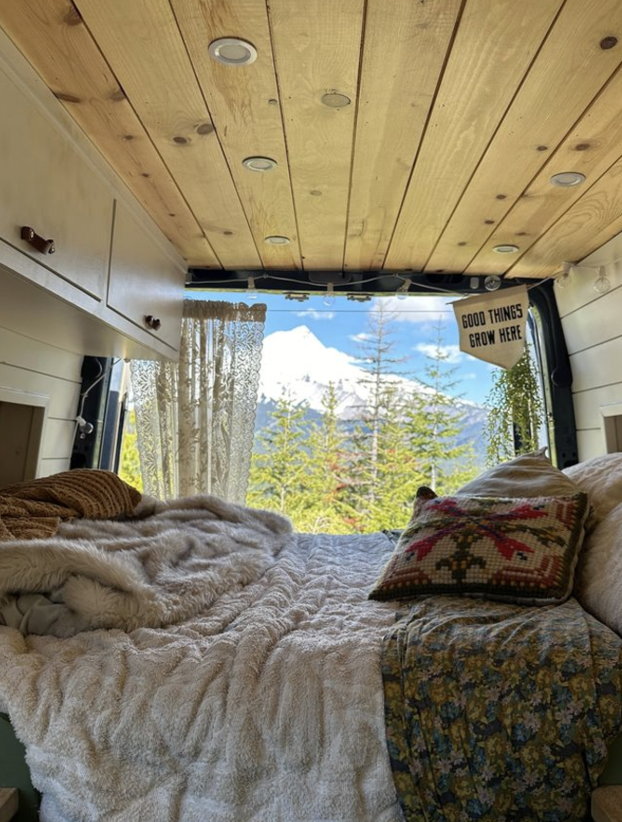
There are multiple types of tiny living: living in a bus, living in a van, living in a permanent house, and living in a house that is on wheels. There are pre-made options but many people who choose this lifestyle choose to custom-build their rig so that it fits their needs.
Travel
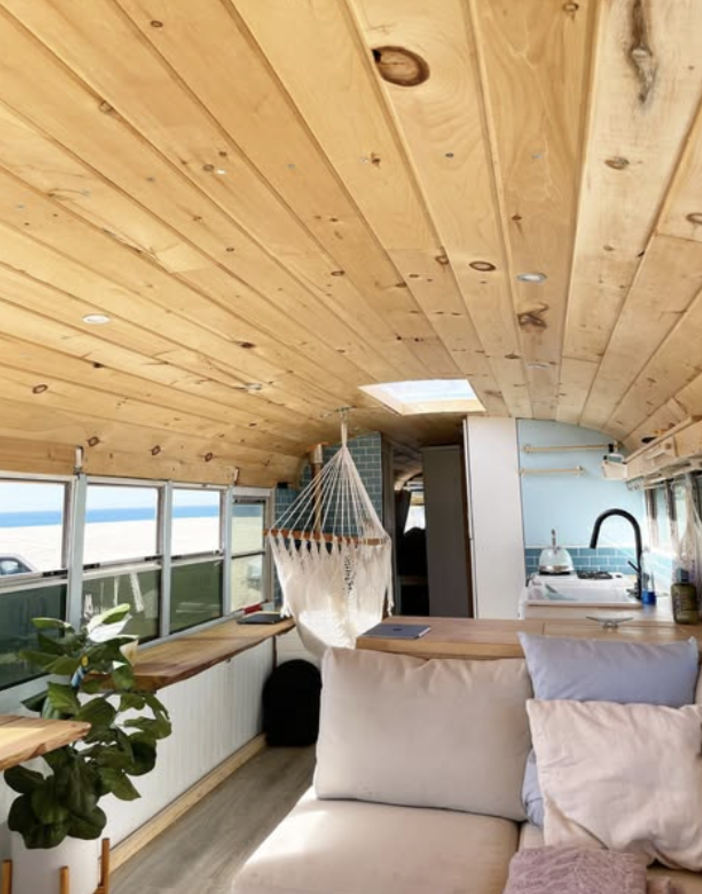
Different types of tiny living allow for different levels of convenience when it comes to travel. A permanent tiny house has the same travel convenience as if a person lived in a standard house. A tiny house that is built on a trailer provides more travel accessibility than a permanent tiny house but less than a van or bus. Buses can go almost anywhere but it takes a little more planning than a van. Last but not least, the most convenient option for travel is a van.
Price
The price of a tiny house varies based on the type of house, if it is premade or custom, and whether second-hand or new materials are bought or found. Overall, living in a tiny house is generally cheaper than owning a regular house.
Nick and Allison live in a bus (@rollingwithophelia on social media). On their social media, they have said that the cost of their bus build was:
| - Total = $45,000 |
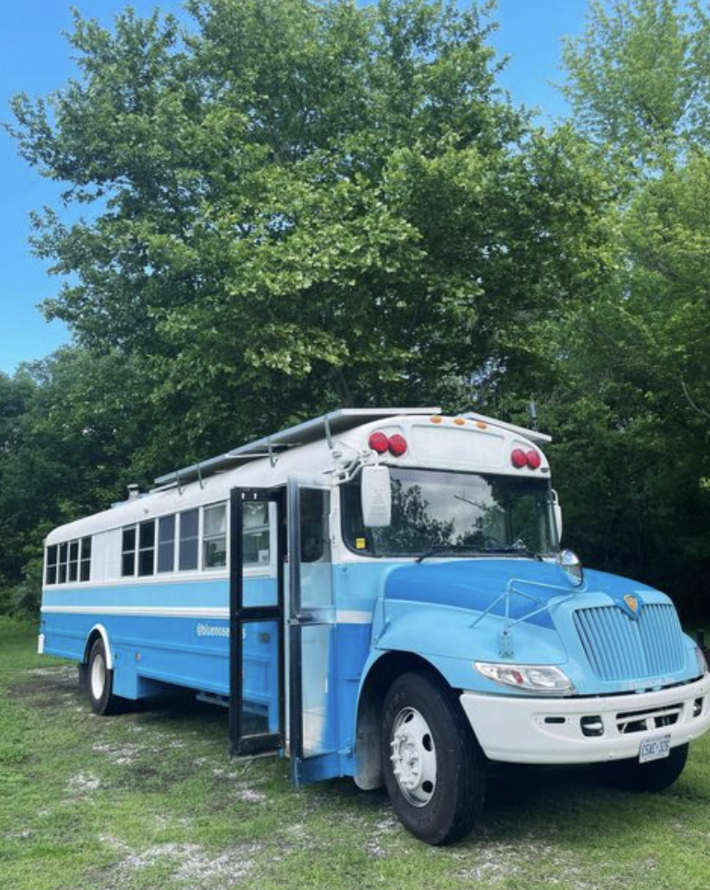
Brendan and Sophia live in the Blue Nose Bus (@bluenose_bus on social media). They made a video with a cost breakdown of their rig:
| - Bus = $2,600 |
| - Renovations = $12,000 |
| - Total = $14,000 |
Bella Janssen (@thelonesolninstagram on social media) lives in a van. She made a video with a very thorough price breakdown of her rig:
| - Van = $27,000 | - Exterior = $5,127 |
| - Lumber = $5,507 | - Insulation = $863 |
| - Electrical = $5,035 | - Plumbing = $1,545 |
| - Appliances & propane = $2,621 | - Random = $5,988 |
| - Build total = $26,685 | - Grand total = $54,485 |
Pros and Cons
There are multiple pros and cons of tiny living:
Pros
1. Depending on the type of home, you can travel more spontaneously
2. Cheaper than a standard home (no rent or utilities)
3. More time spent in nature
4. Minimalistic lifestyle
5. The comfort of home wherever you travel
Cons
1. Finding jobs and work can be challenging
2. Difficult on relationships (spending 24/7 with whoever you live with)
3. Lack of basic amenities depending on your rig (dishwasher, shower, toilet, etc.)
4. Constantly planning if you don’t have a permanent parking spot (where to sleep, where to travel, what happens if you are on the road and your rig breaks, etc.)
5. Possible lower levels of safety